Clare Valley Rocks
The earth beneath our vines
Why Geology Matters
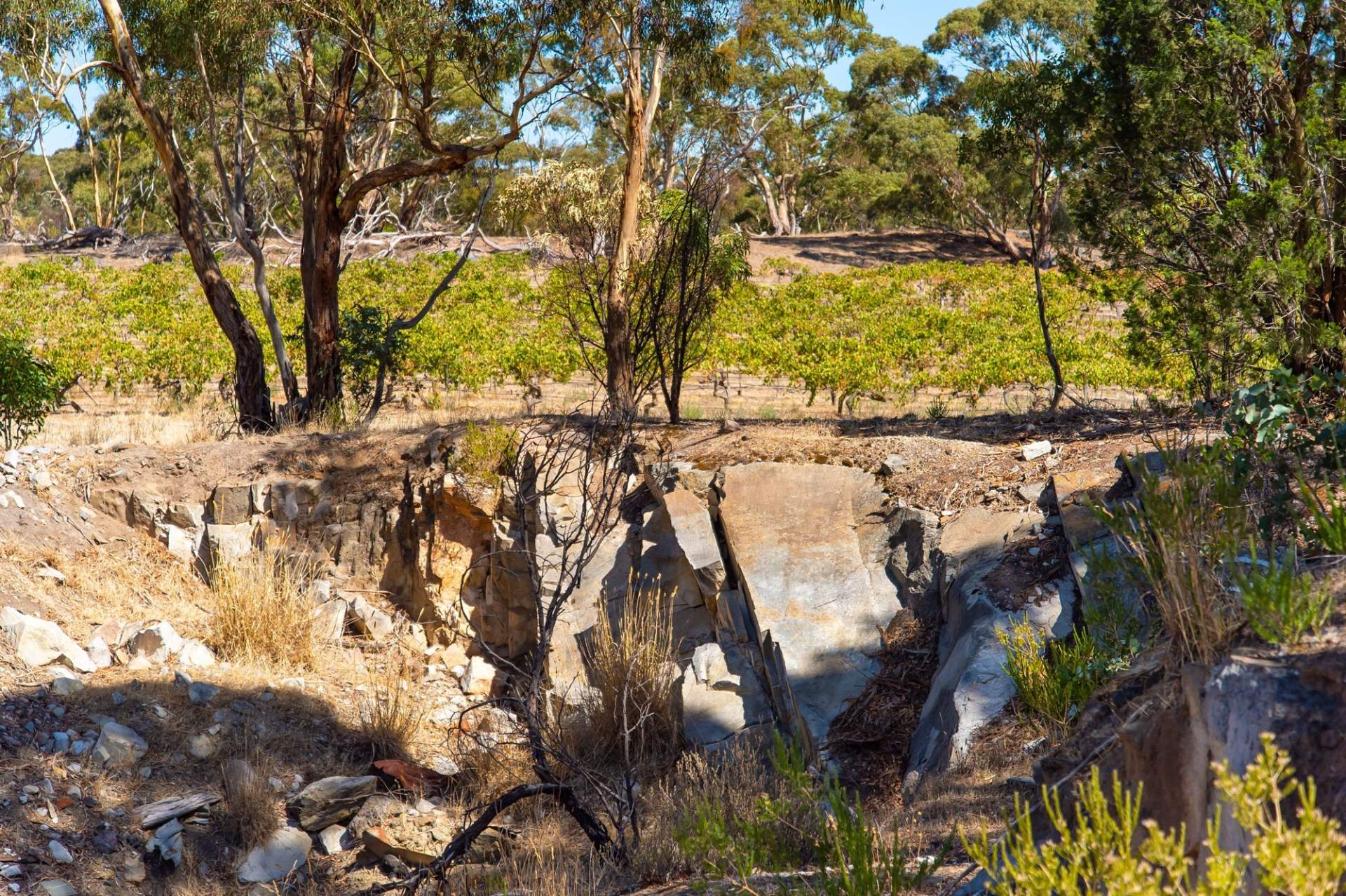
Every great wine begins with the ground beneath our feet. The Clare Valley’s vineyards grow on some of the oldest rocks on earth, formed over 800 million years ago, creating an extraordinary patchwork of soils that give our wines their distinct flavour and personality.
The Clare Valley’s geology is the foundation of its world-class wines.
Different rocks and soils influence how vines grow, how grapes ripen, and how wine tastes:
Water and nutrients – Some soils drain freely, others hold moisture, shaping vine growth.
Temperature – Light, rocky soils warm quickly; heavier clays stay cooler and preserve freshness.
Mineral balance – Limestone, slate, sandstone, and dolomite each lend subtle nuances to flavour and texture.
That’s why a Riesling from Polish Hill River, grown on slate and siltstone, tastes so different from one at Watervale, where red loam sits over limestone. The geology is the story in every glass.
A Landscape Written in Stone
The Clare Valley isn’t one simple valley, but a series of rolling ridges and valleys. Beneath the vines lie eleven soil zones and more than twenty soil types, often changing within metres. This natural diversity allows winemakers to craft wines that range from crisp, citrusy Rieslings to bold yet elegant Shiraz and Cabernet Sauvignon.
Discover Clare Valley Rocks
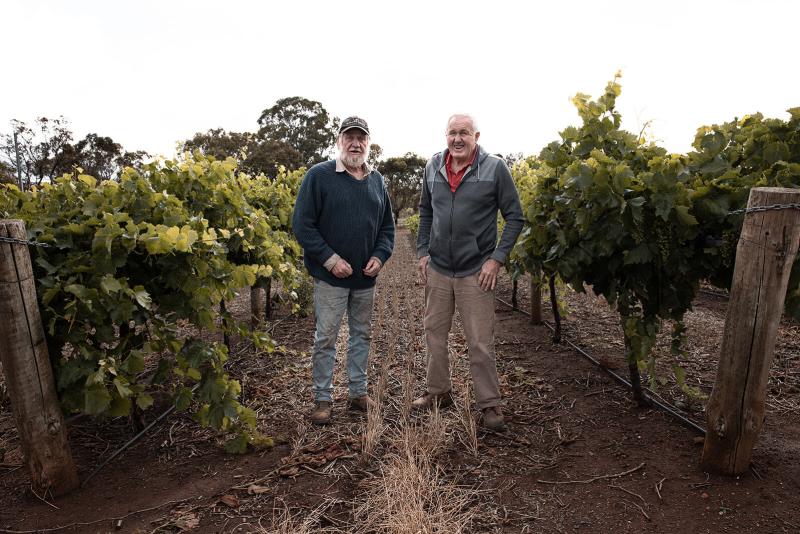
The Clare Valley Rocks Project was created to share the region’s geological story. Local winemaker Andrew Pike and geologist Mick Roche led the initiative to link vineyards with the earth below, through maps, interpretive signs, and soil displays at wineries. Visitors can explore this connection firsthand along the Riesling Trail, with stops at places like Waterloo Homestead, Sevenhill, and Spring Gully.
So next time you raise a glass of Clare Valley wine, think about the ancient rocks beneath the vines, hundreds of millions of years in the making, and every bit as important as the sunshine and the skill of the winemaker.
This set of 41 paleo-elevation models (DEM) represents the changing paleogeography of the oceans and continents back to 540 million years ago (Cambrian-Precambrian Period). The snapshots of ancient elevation and bathymetry, based on the interpretation of the rock record, were estimated for time intervals 5 million years apart. The digital elevation model starts when Pangea split into the supercontinents of Laurasia (northern hemisphere) and Gondwana (southern hemisphere). These two continents subsequently subdivided to form the modern continents and ocean basins. India, which rifted from Gondwana ~100 million years ago collided with Asia to form the Himalaya mountains and Tibetan plateau 50 million years ago. The resolution of the data is 1 geographic degree.
This animated map was made using Esri's ArcGIS Pro, GPlates, Cinema 4D, Redshift, and Adobe After Effects. Please visit http://ow.ly/fm2950xgu0B for more information about ArcGIS Pro.
The data used to create the side animation are courtesy of Prof. Christopher R. Scotese, PALEOMAP Project: http://www.earthbyte.org/paleodem-res...